 Mikel
MikelFlash Media Server 3.0.2
官方地址:
http://www.adobe.com/support/flashmediaserver/downloads_updaters.html
Release Notes:
http://www.adobe.com/support/documentation/en/flashmediaserver/302/FMS_302_ReleaseNotes.pdf

[资源]最新FlexSDK支持Flash Player10的新功能
5月15日,Adobe放出了最新的Flex 3 SDK,可以使开发者通过该SDK来编写FP10中相应的新功能的应用。
http://opensource.adobe.com/wiki/display/flexsdk/Targeting+Flash+Player+10+Beta
[教程]ASP.net WorkFlow的实例
I built a sample (you can download it here) based upon a question asked in the WF forums last night (you can see the post here).
I wanted to post it here so I could point out some of the interesting features it has in it.
First – there is a CallWorkflowActivity – which creates and executes another workflow in a synchronous manner. The WF built-in InvokeWorkflowActivity invokes another workflow – but does it asynchronously. It turns out to do is synchronously you have to build a custom activity – mostly because synchronously you have to make some assumptions about the workflow you are calling. In my example – the assumption I am making is that the "called" workflow will have parameters to pass in, and parameters that are return – but there is no other communication between the host and the workflow.
Now – since my CallWorkflowActivity can't talk to the WorkflowRuntime directly – in order to make it work I implemented a service to add to the WorkflowRuntime. Why can't the activity talk to the WorkflowRuntime? Well that could create some interesting problems – like what if an Activity could ask the WorkflowRuntime to persist the WorkflowInstance the Activity is being executed inside of? The Activity would be executing waiting for persistence, the WorkflowRuntime would be waiting to persist until the Activity completed – classic deadlock.
InvokeWorkflow uses a service that is installed by default – IStartWorkflow – which works create in the async case – but doesn't work in the sync case. So I just created a custom service. One aspect of WF that I try to emphasize to people when I do my WF trainings is that even though there are well-known services inside of the WorkflowRuntime – you can add any number of services which won't be known to the WorkflowRuntime – but can be used by your Activities. In fact this is necessary in some cases (like this one) where the code you want to execute would be "illegal" inside of Activity.Execute (things like spawning threads or anything that would go against the model of WF in terms of what Activities should do). Now in this case I made the Service derive from WorkflowRuntimeService because my service needs the WorkflowRuntime to do its job, and that is the easiest way to get a reference to the WorkflowRuntime. But it isn't a requirement that a service added via WorkflowRuntime.AddService derive from WorkflowRuntimeService.
So here is how my service executes a workflow:
public class CallWorkflowService : WorkflowRuntimeService
{
public void StartWorkflow(Type workflowType,Dictionary<string,object> inparms,Guid caller,IComparable qn)
{
WorkflowRuntime wr = this.Runtime;
WorkflowInstance wi = wr.CreateWorkflow(workflowType,inparms);
wi.Start();
ManualWorkflowSchedulerService ss = wr.GetService<ManualWorkflowSchedulerService>();
if (ss != null)
ss.RunWorkflow(wi.InstanceId);
EventHandler<WorkflowCompletedEventArgs> d = null;
d = delegate(object o, WorkflowCompletedEventArgs e)
{
if (e.WorkflowInstance.InstanceId ==wi.InstanceId)
{
wr.WorkflowCompleted -= d;
WorkflowInstance c = wr.GetWorkflow(caller);
c.EnqueueItem(qn, e.OutputParameters, null, null);
}
};
EventHandler<WorkflowTerminatedEventArgs> te = null;
te = delegate(object o, WorkflowTerminatedEventArgs e)
{
if (e.WorkflowInstance.InstanceId == wi.InstanceId)
{
wr.WorkflowTerminated -= te;
WorkflowInstance c = wr.GetWorkflow(caller);
c.EnqueueItem(qn, new Exception("Called Workflow Terminated", e.Exception), null, null);
}
};
wr.WorkflowCompleted += d;
wr.WorkflowTerminated += te;
}
}
Notice the use of anonymous delegates really helps in this case. No need to keep state about workflow instances around in the service – the anonymous delegates get registered and unregistered for each Workflow execution.
To get the data back to the Activity – the WorkflowQueue name that the Activity created – so the Activity can return ActivityExecutionStatus.Executing from Execute – and it waits for an item to come back on the Queue.
If the Workflow terminates – the service sends an exception into the WorkflowQueue – which causes that exception to promolgate to the workflow itself.
Another interesting part of this sample is the use of the WorkflowParameterBindingCollection – similar to the way that the InvokeWorkflow,CallExternalMethod and other built-in activities do. Make note of the DependencyProperty declaration and the call to base.SetReadOnlyProperty in the constructor – both are necessary to get Collections to serialize correctly into your .designer file.
[教程]SQLServer2005还原数据提示数据备份不同
刚才还原数据的时候发现还原失败问题,于是去google搜了一下,
原来2005恢复2000的备份文件,需要设置一下兼容级别
将SQL server 2005的兼容级别设置为80,然后再恢复SQL server 2000的备份文件.
更改方式如下:
Microsoft SQL Server Management Studio->ServerName->Database->database name ,right manu->properties->options->Campatiblity level->downframe list,select: sql sever 2000 (80)-> Click buton ok
恢复完毕后,再改为90.
同时还原SQLServer2005时千万千万不要改备份文件中的还原路径,否则会提示备份数据库与现有数据库不同的错误
[资源]ASP.net资源汇总
概述
本期共有10篇文章,内容涉及ASP.NET MVC Framework、ASP.NET 3.5、Unity、ASP.NET AJAX、Silverlight、ADO.NET Entity Framework、WCF、Web Service Software Factory等。
1.Kigg – Building a Digg Clone with ASP.NET MVC Part – 1
2.Building Sleek, Soft and Simple DataGrids
3.Building a LinkedIn Style Address Book with the ListView and LinqDataSource Controls
4.Create a Slide Show Using the AJAX SlideShow and TreeView Controls
9.Your First Silverlight 1.1 and Ajax Project
10.Dropthings – Ajax Web Portal
ASP.NET
1.Kigg – Building a Digg Clone with ASP.NET MVC Part – 1
导 读:又是一篇关于ASP.NET MVC Framework的非常棒的文章,使用ASP.NET MVC Framework、LINQ to SQL和ASP.NET AJAX来开发一个类似于Digg网站的应用程序,本文为第一部分,是学习ASP.NET MVC Framework项目实战不可多得的好文章。开发出来的网站最终效果如下:

图1 Kigg.com网站图
推荐指数:
2.Building Sleek, Soft and Simple DataGrids
导读:Matt Berseth大牛实现的一个非常酷的圆角DataGrid效果,啥也不说了,直接贴张效果图吧:
推荐指数:
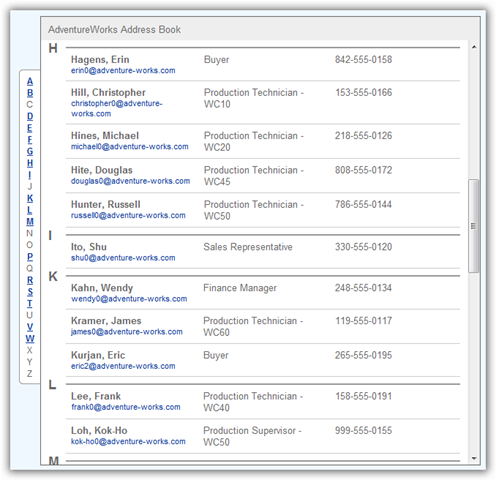
3.Building a LinkedIn Style Address Book with the ListView and LinqDataSource Controls
导读:同样是来自于Matt Berseth大牛的一篇文章,使用ListView和LinqDataSource控件实现了一个类似于LinkedIn.com网站中的通讯录,效果如下:
推荐指数:
ASP.NET AJAX
4.Create a Slide Show Using the AJAX SlideShow and TreeView Controls
导读:使用ASP.NET AJAX Control Toolkit中的SlideShow控件和TreeView控件来构建一个幻灯片播放应用程序。
推荐指数:
.NET Framework
5.挖掘ADO.NET Entity框架的性能
导 读:ADO.NET团队最近讨论了ADO.NET Entity框架的各种性能特征。ADO.NET Entity框架在12月已经进入它的第三个beta版本,自那时起开发团队就开始为开发人员提供了使用该框架的相关信息。而现在,则为开发人员提供了框 架性能方面的信息。
本文鞭辟入里地介绍了ADO.NET Entity框架的性能,演示了如何提高简单查询速度的方法,并阐释了框架的性能特征。在之前的推荐系列中我曾经推荐过ADO.NET团队博客上的一篇文章。
推荐指数:
6.Web 服务软件工厂建模版本
导 读:来自于MSDN杂志的一篇文章。Web 服务软件工厂:建模版本也称为“服务工厂”,它是一个资源集合,这些资源可帮助您以简单有效的方式在 Windows® Communication Foundation (WCF) 和 ASMX 中建模和构建 Web 服务。与先前版本的服务工厂相比,最新版本使用的是模型,而先前版本使用的是基于 Guidance Automation Toolkit (GAT) 的向导。服务工厂现在允许您通过创建三种不同的模型来构建 Web 服务:数据约定模型、服务约定模型和宿主模型。本文将首先讨论这三种模型,然后再为您介绍如何自定义服务工厂。
Web服务软件工厂主页:http://www.codeplex.com/servicefactory
推荐指数:
7.Reviewing Unity
导读:Oren Eini作为Castle项目的负责人之一,作者对微软推出的依赖注入容器Unity进行评述,分别阐述了Unity的优缺点,包括Unity中的对于对象实例的生命周期、属性依赖等,值得大家认真关注一下。
推荐指数:
Silverlight
8.First Look at Silverlight 2
导 读:期待已久的Silverlight2终于快要见面了,大家可以通过这篇先了解一下Silverlight2的一些新特性。改进的功能包括:WPF UI框架、丰富的控件、丰富的Networking支持、丰富的基础类库。同时,ScottGu大牛也写了一个关于Silverlight2的系列文章, 使用Silverlight2构建了一个Digg应用,内容涉及到控件,布局管理,networking,数据绑定,样式,用户控件,模板等等,总共有8 篇文章:
Part 1: Creating "Hello World" with Silverlight 2 and VS 2008
Part 2: Using Layout Management
Part 3: Using Networking to Retrieve Data and Populate a DataGrid
Part 4: Using Style Elements to Better Encapsulate Look and Feel
Part 5: Using the ListBox and DataBinding to Display List Data
Part 6: Using User Controls to Implement Master/Details Scenarios
Part 7: Using Templates to Customize Control Look and Feel
Part 8: Creating a Digg Desktop Version of our Application using WPF
推荐指数:
9.Your First Silverlight 1.1 and Ajax Project
导读:来自于Al Pascual的一篇文章,演示了如何开发一个Silverlight1.1和ASP.NET AJAX结合的简单示例程序。
推荐指数:
开源项目
10.Dropthings – Ajax Web Portal
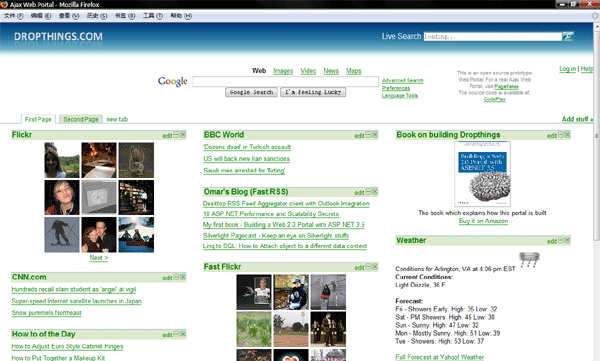
导读:Dropthings是一个AJAX Web Portal示例项目,类似于Live.com站点,构建于Linq、Workflow Foundation和ASP.NET AJAX之上。该项目的官方网站是http://www.codeplex.com/dropthings/,演示站点http://www.dropthings.com/。同时作者还为这个项目写了《Building a Web 2.0 Portal with ASP.NET3.5》一书,一步一步讲解如何构建该项目。
推荐指数:
作者:TerryLee
[应用]Dropthings.com
Dropthings – Ajax Web Portal
简介:
Ajax Web Portal 建立在Linq,Workflow Foundation , ASP.NET AJAX,Visual Studio 2008 , .NET 3.0 and .NET 3.5.也是 对微软最近发布的新知识的一个很好的学习机会。
官方网址:
http://www.dropthings.com
源码地址:
http://www.codeplex.com/dropthings/
[教程]ASP.net组件开发教程
本系列文章示例源码下载.各位如遇问题,请多查msdn,多利用网络.本人可能没时间一一回复,谢谢你们的支持,希望看到此文的人都能学好控件开发
http://www.cnblogs.com/Clingingboy/archive/2008/01/31/1059617.html
此系列我将尽我所能写下去吧,跟大家分享自己的经验。也希望大家对我多提意见,让我们共同进步
本文将持续更新.
推荐图书
道不远人:深入解析ASP.NET 2.0控件开发 作者博客(博客园自己人写的)http://thinhunan.cnblogs.com/ 书出错或有问题就找他-__-
1.Building ASP.NET Server Controls
2.Developing Microsoft ASP.NET Server Controls and Components Microsoft
3.Wrox Professional ASP.NET2.0 ServerControl and Component Development
4.asp.net服务器控件开发技术与实例
5.深入剖析ASP.NET组件设计
第一部分 asp.net控件开发基础
1.asp.net控件开发基础(1) ———-接触自定义控件
2.asp.net控件开发基础(2) ———-明白使用Render方法呈现自定义控件
3.asp.net控件开发基础(3) ———-自定义控件事件处理
4.asp.net控件开发基础(4) ———-明白使用RenderContent方法呈现自定义控件
5.asp.net控件开发基础(5) ———-简单介绍自定义控件简单属性和复杂属性
6.asp.net控件开发基础(6) ———-简单介绍自定义控件样式属性
7.asp.net控件开发基础(7) ———-初步认识复合控件
8.asp.net控件开发基础(8) ———-在复合控件中中的事件处理(事件冒泡)
9.asp.net控件开发基础(9) ———-再谈属性,学习自定义类型转换器
10.asp.net控件开发基础(10) ——–再谈属性,实现自定义控件集合属性
11.asp.net控件开发基础(11) ——–自定义视图状态管理
12.asp.net控件开发基础(12) ——–为子控件添加样式
13.asp.net控件开发基础(13) ——–服务器控件客户端功能
14.asp.net控件开发基础(14) ——–服务器控件生成器
15.asp.net控件开发基础(15) ——–总结和补充
第二部分 asp.net控件开发进阶
16.asp.net控件开发基础(16) ——–服务器模板控件
17.asp.net控件开发基础(17) ——–初识数据绑定控件
18.asp.net控件开发基础(18) ——–让DadaSource接受过多的数据源
19.asp.net控件开发基础(19) ——–数据列表绑定控件
20 .asp.net控件开发基础(20) ——–asp.net2.0数据绑定控件新做法
21 .asp.net控件开发基础(21) ——–让旧数据绑定控件支持数据源控件
22 .asp.net控件开发基础(22) ——–定义数据源控件(1)
asp.net控件设计时支持
1.asp.net控件设计时支持(1)—-基础认识
2.asp.net控件设计时支持(2)—-自动格式设置
3.asp.net控件设计时支持(3)—-操作列表与模板编辑
4.asp.net控件设计时支持(4)—-设计器区域编辑
[教程]使用微软ASP.NET MVC Framework的一些感受 + 收集园子朋友发现的bug反
用ASP.NET MVC快一星期了,之前是苦苦的等待,之后是苦苦的摸索和总结,现在这个MVC在我脑子里已经有了个大体的评价,写出来与大家分享。
关于MVC本身的优点,就不再详述,地球人说了好多了。
所以我光说说微软的ASP.NET MVC Framework(目前还非正式发布版本,为CTP版)的一些个人感受。
这里先确定一个个人的感情基调:我对.NET3.5绝对拥护,对MVC绝对期待。正因为如此,对里面的不足我会不遗余力地和大家分析探讨。
首先,ASP.NET 引入MVC这个模块不本身不能算是3.5的什么“独门绝技”,也不用因为使用了MVC而对.NET3.5大加赞赏(没有贬义),因为MVC(以下说的MVC都是ASP.NET MVC Framework CTP版) 的引入只能说明ASP.NET向更合理、更顺应企业级的开发模式潮流又进了一步,其模式是早就存在的(我不太愿意说谁抄谁的话,也不关心,对我们来说好用 就行)。甚至从这个角度上来说MS已经慢了半拍。之所以说是进步,至少MVC的出现解决了我认为ASP.NET在客户体验和模式上的3大不足:
一、网页生命周期过长(那是相当的长)。
二、与第一点相关的,“巨无霸”VIEWSTATE以及PostBack功能大大增加了用户流量,使得客户体验大大降低(这里不讨论Ajax的弥补作用,光说最基本的WebForm模式,不然有很多可以引起技术争论的地方)
三、服务器控件自动生成的客户端ID,使得开发人员对客户端页面控制(如使用js)太吃力。不得不一天到晚和.ClientID打交道,效率也太低。
所以有人说MVC具有里程碑式的意义,这点我赞同。
下面来说说这一周不到的时间内我发现了MVC哪些值得改进和需要注意的地方。
一、不是MVC本身不足,而是 Scott Guthrie 在他的教程(包括示例源码)中有点误导地球人,他普遍使用了这样的格式(下面说的这种方式需要用到MVCToolkit.dll,这里有下载http://asp.net/downloads/3.5-extensions/MVCToolkit.zip,目前vs2008和MVC CTP没有提供):
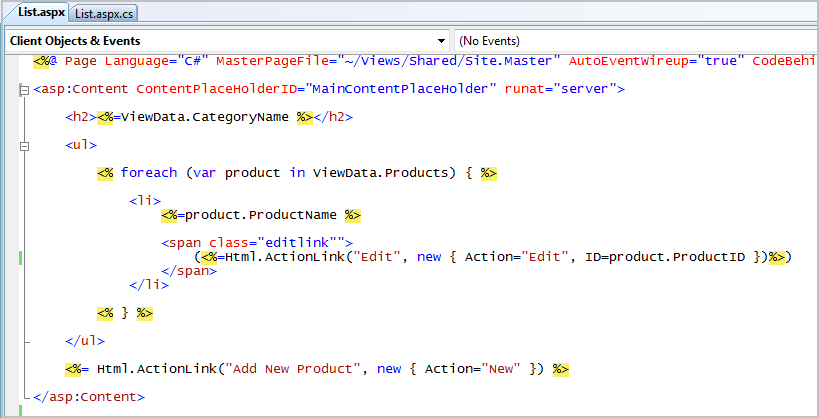
大家注意Html.ActionLink()里面的"Action="后面,他使用的是字符串常量"Edit" 和"New",这是Controller层中的一个方法,用于控制网页行为。第一次看到这个,我简直有点气愤——.net3.5在面向对象上面花了那么大 功夫,到他手里怎么还要这样引用?这也叫面向对象?况且这比起原始的Codebehinde更不利于程序员和美工的协调。让我感觉大楼快封顶的时候,决定 用草棚做顶。两个字——失望。
二、不过我信心马上又来了,我看到了ActionLink提供了另外一种使用范型的方法ActionLink<T>,并且找到了一篇ASP.NET MVC Preview: Using The MVC UI Helpers 的文章(强烈建议大家作为基础看看),看到了ActionLink<T>的使用已经另外一些ScottGu没有提到的方法。
比如Button<T>是这样使用的:
 <%=Html.Button<HomeController>(x=>x.Index(),“cmdNav2″,“Home”) %>
 用Lambda表达式x=>x.Index()取代了生硬的"Index"。
于是我开始coding……几秒钟后,让我失望的事又发生了……
当我输到x=>x.的时候,后面的再也出不来了,看来又是一个bug!
起初我以为这只个是MVC调用功能上的bug,是不是这个功能他们还没有做好?
后来TT.NET发现其实Button<T>不是不能调用,只是不能显示,如果先把后面的内容输好,再完成Lambda是可以.出来的!松了一口气,但这还是MVC或者是VS2008显示上的一个bug。
补充一下:TT.NET刚才跟我说,不是所有的ctl<T>都不能使用Lambda来自动完成,比如Html.Form<>就是可以的,那应该可以更加肯定是MVC或者说是MVCToolkit的bug了。——2007.12.18 14:2
三、在调试的时候发现,即使你在输入
<%=Html.Button<HomeController>(x=>x.Index(),“cmdNav2″,“Home”) %> 的时候,忘了输入最后一个),编译也不会报错(这个问题可能属于vs本身检测机制的问题),而是到打开网页的时候,运行时错误,虽然不是大问题,细心的程 序员都会自己看一遍,但是由于是在.aspx中编写,貌似就享受不到linq在.cs中编译时就检查出错误的那种“舒适”。当然话说回来,MVC是不提倡 在View层使用这些Controller层的命令的,但终归是个遗憾。
四、我们有时候需为了简化网页流程和减少代码页,往往把插入新纪录和编辑区域合为一体,即同样一 组TextBox输入框,在一个变量或者控件的控制下,可以转换“Insert”或者"Update"的功能。这是一种不错的思路,也免去了这一组 “TextBox”该不该复用的思想斗争以及复用之后一系列繁琐的操作(即使有些MVC观点似乎更提倡分开表示)。当你修改的时候,由ViewData传 入一个Entity,Entity里面是某条记录的所有值,这时候赋给TextBox显示是没有问题的,问题就出在这个页面需要我们执行"Insert" 的时候,我们往往会传入一个空的Entity(如:SzwEntity szwEntity= new SzwEntity();),这时候麻烦来了,如果你使用O/RM设计并且里面有string字段的话会发现一运行就报错,我找了半天总算找到了原因: 在.dbml(O/RM文件)下面的.designer.cs中,定义publish string str;的时候,并没有按照我SQL数据库中Default 'xxx'赋予初始值,当我们SzwEntity szwEntity= new SzwEntity();的时候,里面所有的string字段都为null,这当然不能为Html.TextBox()等作为value显示,此时int反而没事,因为int初始默认值已经是0了。
因此目前最好的解决办法就是在.designer.cs中给他们赋一个初始值,比如:
private System.DateTime _EndTime=DateTime.Now; private string _UserName=string.Empty;他们原本是这样的:
private System.DateTime _EndTime; private string _UserName;这应该是算VS2008和MVC配合上出了点小问题。如果分来开看,或许倒不算什么bug,反而有他们各自的用意和规范在里面。
五、我觉得最头疼的一个问题,应为在MVC技术层面上似乎还不那么好解决:打开MVC的Global.asax,我们可以看大哦这样一句话:
// Note: Change Url= to Url="[controller].mvc/[action]/[id]" to enable // automatic support on IIS6 就是说,如果你用的是IIS6(WindowsXP/2003)的话,你就势必要使用[controller].mvc/[action]/[id]的格 式,而不能“享用”[controller]/[action]/[id]了。最大的问题倒不是在美观和这种格式可读性的初衷上面,而是在以下两个方面:
1、如果到时候系统升级到IIS7(Windows2008/Vista),所有外部的链接是不是还能访问带".mvc"的路径,这面临着一个兼容性的考验。
2、了解Search engine robots 工作原理的朋友肯定都知道,我们当初煞费苦心把.aspx/asp/php/jsp“伪装”成.html是为了什么。对,就是为了让Search engine robots能有对这些.html产生“好感”,便于收录和打分,而现在的.mvc算什么?Search engine robots是不是可能会把.mvc后面的当做网页参数,把.mvc当成文件扩展名?如果我的假设成立,天,那.mvc的遭遇岂不是很悲惨?不知道 Search engine robots是否会看到.mvc之后,久久崇拜一番然后一声叹息扬长而去。
以上是我用了MVC之后,发觉的比较重要和“隐藏的够深”的一些问题,不涉及整体框架的不足(比如用{$}替换机制等等)。还有一些显示上的问题可能和 VS2008本身有关,待我确认是MVC的问题之后,我会都发上来,如果大家还发现了别的什么问题,希望一同交流,我会一并整理进来,方便大家参考!
前途是光明的,道路是曲曲折折的 LIKE THIS~~~~~~~~haha only a joke
http://szw.cnblogs.com/
研究、探讨ASP.NET
转载请注明出处和作者,谢谢!
[图书]Creating Mashups with Adobe Flex and AIR
下载:Creating Mashups with Adobe Flex and AIR
简介
Web applications no longer need be powered by any one individual's data, and they don't need to be confined to the desktop. Developers can draw on a wealth of publicly available content, from providers such as Flickr, Amazon, Google, Twitter, and Last.fm, and combine it for use in their own applications. Adobe Integrated Runtime (AIR) makes it simple to bring previously web-only applications to the desktop, allowing them to run alongside traditional applications on an end user's computer.
In this book, you'll learn how to create mashup applications from the vast array of web services, feeds, and APIs using Adobe Flash and Flex together with HTML and JavaScript (Ajax). You'll be introduced to the various sources of information and the tools necessary to gather and reuse that information, and then you'll learn how to combine that content in a variety of ways.
You'll learn how to have desktop applications interact with online services such as Flickr, you'll learn how to use Amazon S3 for enterprise-level data storage, and you'll embrace technologies such as OpenID. In addition, you'll create abstract visualizations based on music sourced from Last.fm and consume Twitter content via RSS. You will also see how to use the Flash-native data format SWX along with PHP to create a Yahoo! weather widget.
You'll discover just why you may want to build a widget or a desktop application rather leaving things web-based; then you'll create an application using Flex Builder and AIR and learn how best to distribute it. With so many tools and so much data available, the possibilities for mashup creation are endless. Creating Mashups with Adobe Flex and AIR provides all you need to get you up and running quickly, while also giving you a solid understanding of the technologies involved so you can take things further—to a place limited only by your imagination.
In this book you'll learn
* how to use Flex 3 in conjunction with ActionScript 3.0 to build powerful applications;
* how you can use Adobe AIR to take your application from the Web and onto the
desktop;
* the differences between developing for the Web and for the desktop;
* how you can use the APIs of popular web services such as Flickr, Amazon, Google, Twitter, and Last.fm as data sources for your application; and
* how to optimize your applications for fast and efficient performance.
目录 Summary of Contents
* Chapter 1 Introduction to Mashups
* Chapter 2 Technologies to Mash With!
* Chapter 3 An Introduction to Flex
* Chapter 4 Flex Components
* Chapter 5 Flexing Your Muscles
* Chapter 6 Performance Management in Flex Applications
* Chapter 7 Debugging Flex 3: The Tried-and-True, Plus the New
* Chapter 8 Getting the Most out of APIs
* Chapter 9 Mashing Up Functionality
* Chapter 10 SWX: A Native Flash Data Format
* Chapter 11 Taking It to the Desktop
* Chapter 12 Developing for the Desktop with AIR
* Chapter 13 Adding More Desktop Elements to the Web
* Chapter 14 Building a Desktop Experience
* Chapter 15 Completing the Experience
download: http://uploadstock.com//index.php?page=main&id=4c605910&name=Creating.Mashups.with.Adobe.Flex.and.AIR.rar
Password : knowfree.net
[资源]ASP.net控件字典
http://www.aspnextgen.com/quickstart/aspplus/doc/webcontrolsref.aspx